
The double-edged nature of antibody bivalency: mathematical and experimental analysis of cell surface antigen occupancy and opsonization
The Fc Review:
When does antibody bivalency help, and when can it work against you?
A recent
mAbs study explores the impact of antibody bivalency on antigen occupancy and cell surface opsonization, revealing that the same property can be advantageous or disadvantageous depending on the intended mechanism of action (MoA).
Background:
Most therapeutic antibodies are bivalent, meaning they can bind two target antigens simultaneously. This avidity effect is often viewed as beneficial because it increases apparent binding strength and can improve target engagement.
However, therapeutic success is not always driven by target occupancy alone. For mechanisms that rely on Fc-mediated effector function, the number of antibodies decorating the target cell surface may be just as important.
The study highlights:
- Bivalent antibodies achieved higher antigen occupancy than comparable monovalent antibodies across a range of affinities and antigen densities.
- At the same time, bivalency reduced the total number of antibodies bound per cell because a single antibody could occupy two antigens simultaneously.
- The authors describe an "avidity barrier," where achieving equivalent levels of cell surface opsonization requires substantially higher concentrations of a bivalent antibody.
- The optimal balance between occupancy and opsonization depended on factors including antibody affinity, valency, and target antigen density.
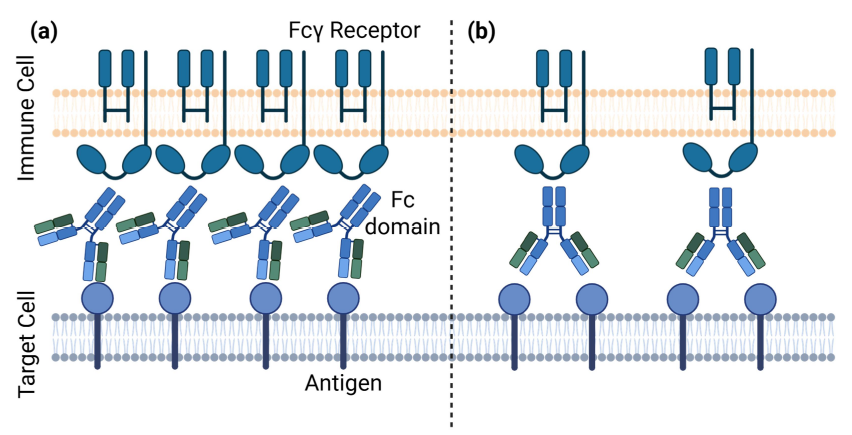
Figure 2. A schematic of antigen occupancy and Fc domain presentation following monovalent or bivalent antibody engagement. (a) Antibodies engaging antigens monovalently can achieve greater density and potentially achieve enhanced FcγR clustering. (b) In contract.
Implications for antibody development:
These findings highlight an important distinction for antibody developers. Maximizing target occupancy and maximizing Fc presentation are not necessarily the same objective.
For antagonistic antibodies, avidity may improve target engagement. For molecules that rely on Fc-mediated mechanisms, antibody density on the target cell surface may become an equally important consideration.
Our perspective:
This work reinforces a recurring theme in antibody engineering: the same molecular feature can have very different consequences depending on the desired mechanism of action.
One of the more interesting implications of this work is that antibody behavior changes as a function of antigen engagement itself. Factors such as antigen density and bivalent binding influence how antibodies occupy targets and present Fc domains to the immune system. This reinforces the value of studying Fc-mediated functions in antigen-relevant systems whenever possible.
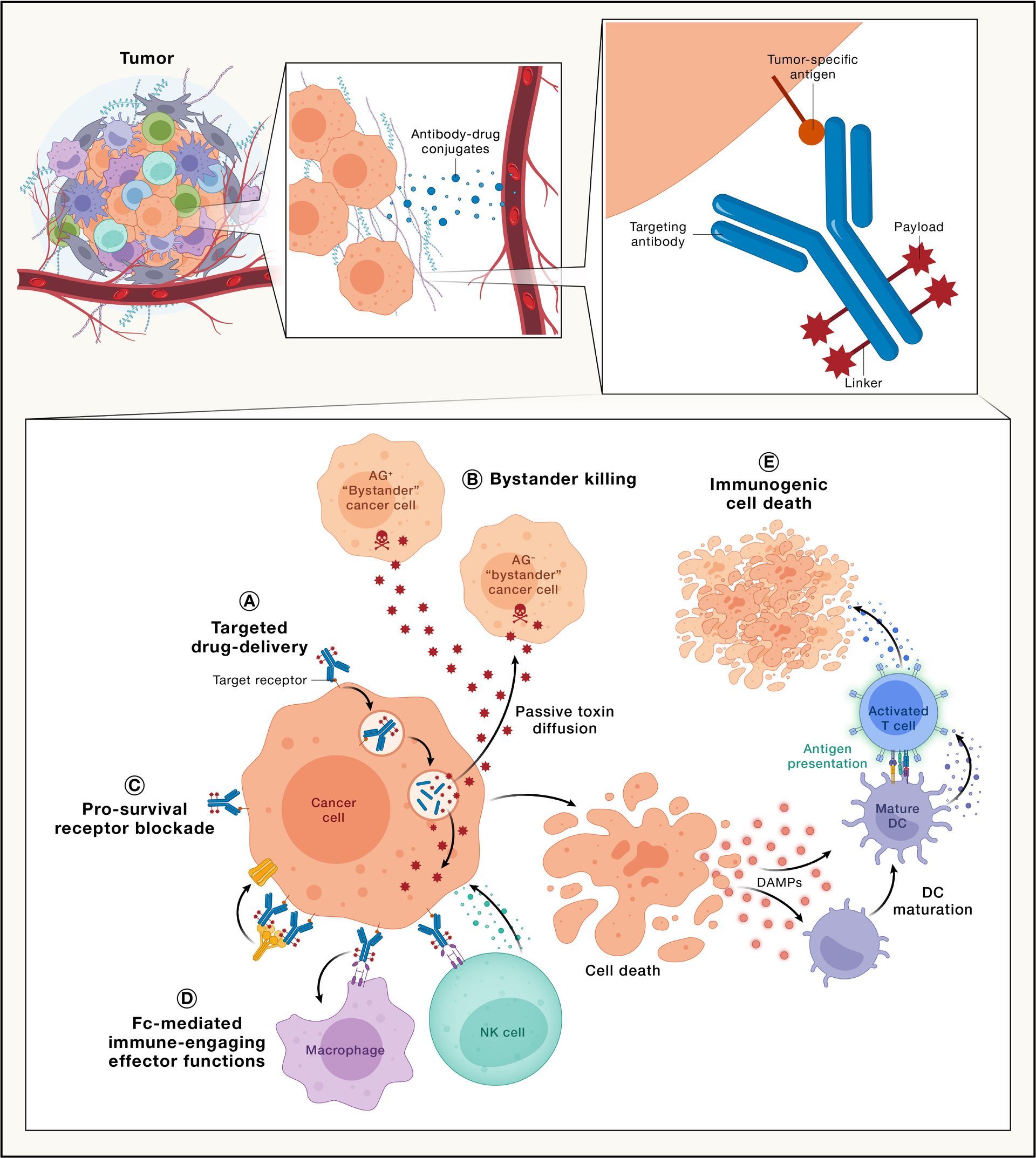
Whether the goal is receptor blockade, ADCC, ADCP, complement activation, or targeted payload delivery, understanding how design choices influence both target engagement and downstream function is critical. Comprehensive Fc profiling can help reveal these tradeoffs early and provide a clearer understanding of how engineered antibodies are likely to behave in biological systems.
References:
Heirene, L., Lodge, J., Fedorova, M., Gauntlett, R., Cordy, J., Rattray, Z., … Yates, J. W. T. (2026). The double-edged nature of antibody bivalency: mathematical and experimental analysis of cell surface antigen occupancy and opsonization. mAbs, 18(1). https://doi.org/10.1080/19420862.2026.2681843