
Overview of antibody-drug conjugates nonclinical and clinical toxicities and related contributing factors
The Fc Review:
Can better antibody engineering improve safety, not just efficacy?
A recent review in
Antibody Therapeutics examines how the molecular design of antibody-drug conjugates (ADCs) influences both nonclinical and clinical toxicities, highlighting that safety is determined by far more than the payload alone.
Background:
ADCs are often discussed in terms of target selection and payload potency, but their safety profile is shaped by the combined properties of the antibody, linker, payload, conjugation strategy, and target biology.
This review examines data from marketed ADCs and explores how each component contributes to toxicity, providing a useful framework for designing safer next-generation therapeutics.
The study highlights:
- ADC toxicity is influenced by the combined effects of target antigen expression, antibody structure, linker stability, payload properties, and conjugation technology rather than any single design feature.
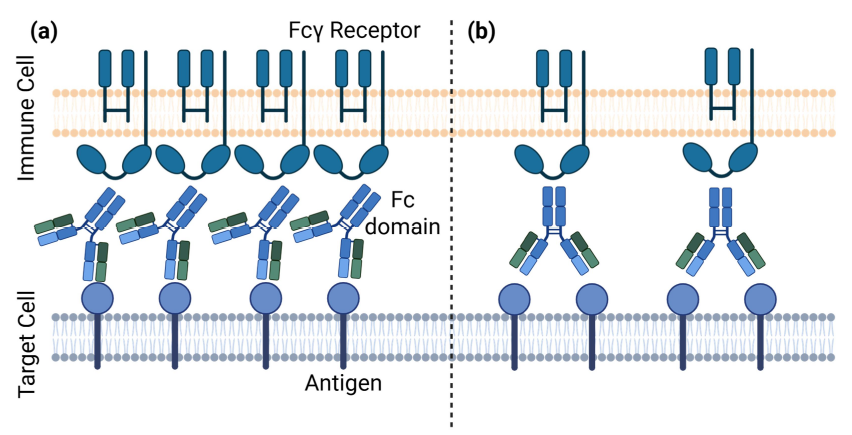
- The Fc region can contribute to off-target toxicity through receptor-mediated uptake. The review discusses roles for Fcγ receptors, FcRn, and C-type lectin receptors in nonspecific internalization that may influence safety.
- Site-specific conjugation technologies can improve homogeneity, produce more consistent drug-to-antibody ratios (DAR), and enhance stability compared with earlier random conjugation approaches.
- Properties such as linker stability, payload hydrophobicity, charge, and DAR all influence biodistribution, payload release, and toxicity, underscoring the importance of considering these design variables together.
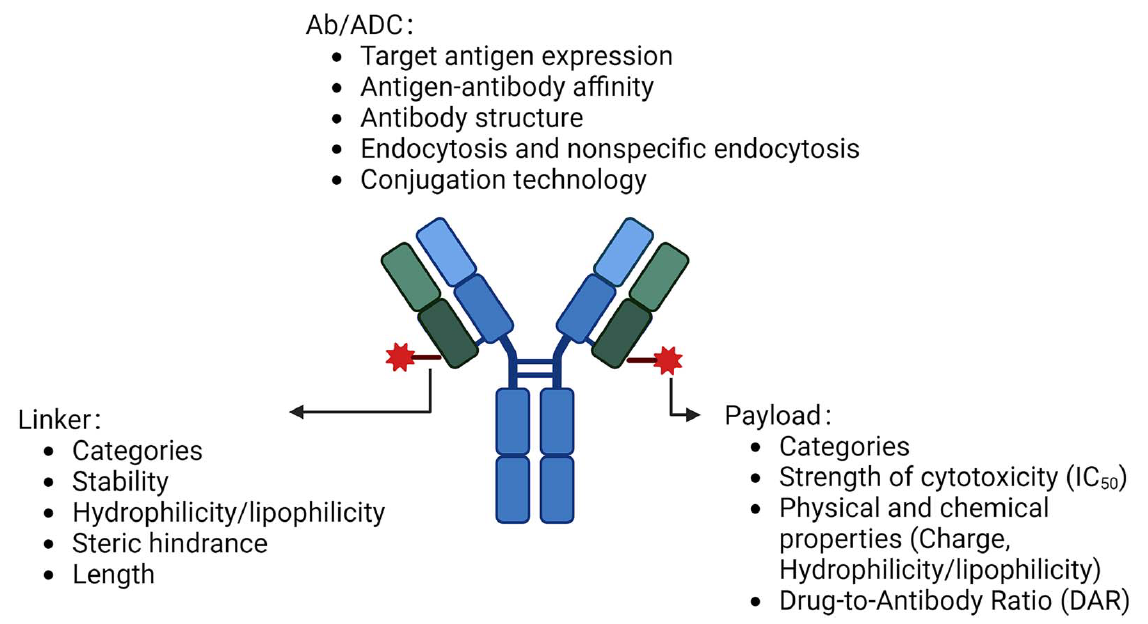
Figure 1. Molecular structural characteristics likely contributing to ADC toxicities. A classic ADC consists of three components: antibody, chemical linker and potent cytotoxic payload. The antibody of an ADC recognizes the target antigen on the cell surface, then the ADC is internalized into the cells through endocytosis. Within the lysosome the payload is released and exerts its cytotoxic effect. The properties of each component may contribute to the toxicity of the ADC, and the payload is one of the most important contributors. The combination of individual components determines the toxicity profile of a certain ADC molecule.
Implications for antibody development:
As ADCs continue to evolve, optimizing efficacy alone is no longer sufficient. A comprehensive understanding of how antibody architecture, Fc interactions, linker chemistry, payload selection, and target biology contribute to therapeutic performance will be critical for improving both therapeutic index and clinical success.
Our perspective:
One of the key messages from this review is that antibody behavior is driven by multiple design elements working together.
The Fc region is one important contributor, but its effects should be considered alongside antigen biology, linker stability, payload characteristics, and molecular architecture.
At SeromYx, we believe these factors are best evaluated as part of a comprehensive characterization strategy. Looking beyond any single attribute can help identify unintended consequences, better inform engineering decisions, and build a more complete understanding of how therapeutic antibodies are likely to perform in vivo.
References:
Cheng Y, Lu J, Zhang C, Yan W, Zhu P, Qin Q, Gong L. Overview of antibody-drug conjugates nonclinical and clinical toxicities and related contributing factors. Antibody Therapeutics. 2025;8(2):124–144. https://doi.org/10.1093/abt/tbaf004