
Navigating the clinical progress of antibody-drug conjugates: Emerging opportunities and remaining challenges
The Fc Review:
How much does Fc design influence the next generation of ADCs?
A recent
Cell review explores the rapid evolution of antibody-drug conjugates (ADCs), highlighting how advances in payloads, linker technologies, and antibody engineering are reshaping the field across both hematologic and solid tumors.
Background:
ADCs were originally developed as targeted delivery vehicles for highly potent payloads. But as the field matures, it is becoming increasingly clear that ADC activity is shaped by far more than antigen targeting alone.
Factors such as linker stability, payload permeability, tumor microenvironment, bystander killing, and Fc-mediated interactions can all influence therapeutic performance.
The study highlights:
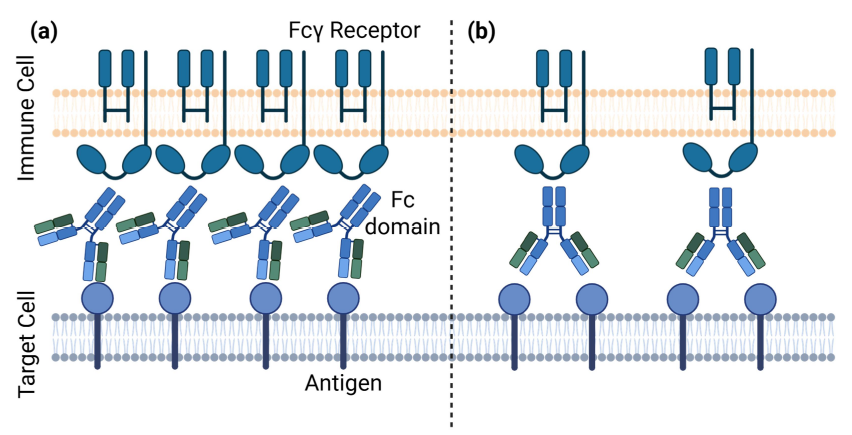
- Fc-mediated mechanisms such as ADCC, ADCP, and complement activation can contribute to ADC activity beyond payload delivery.
- Some next-generation ADCs are intentionally engineered to enhance Fc effector function, while others incorporate Fc-silencing strategies to minimize off-tumor interactions.
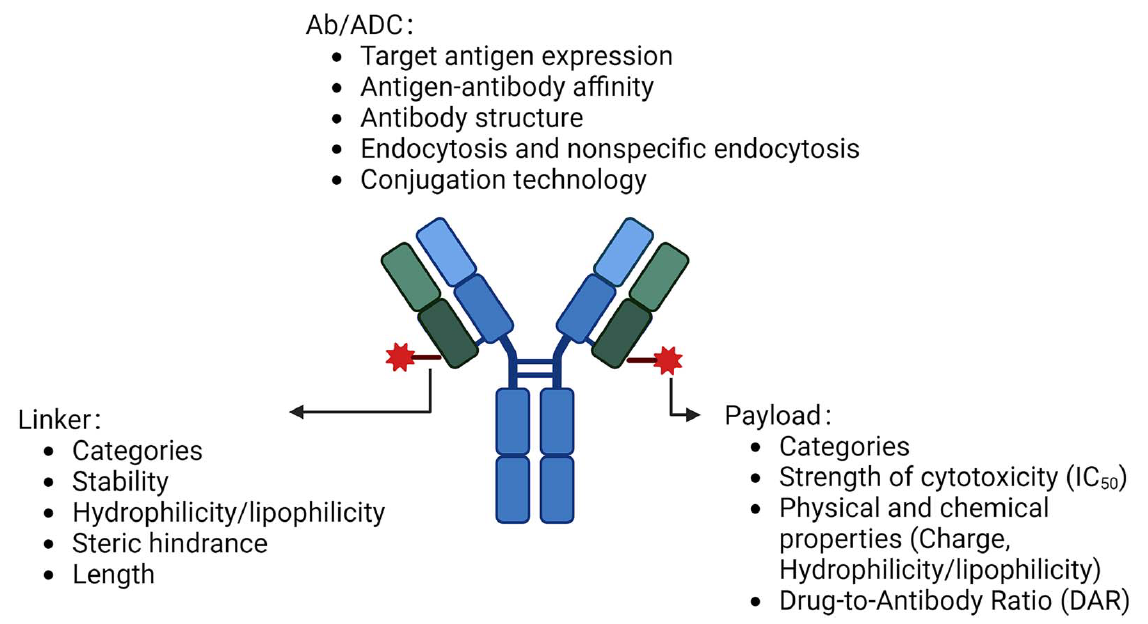
- Payload selection, linker chemistry, and drug-to-antibody ratio all influence efficacy, safety, and bystander activity.
- Tumor antigen expression alone is often insufficient to predict ADC behavior, highlighting the importance of functional characterization and biological context.
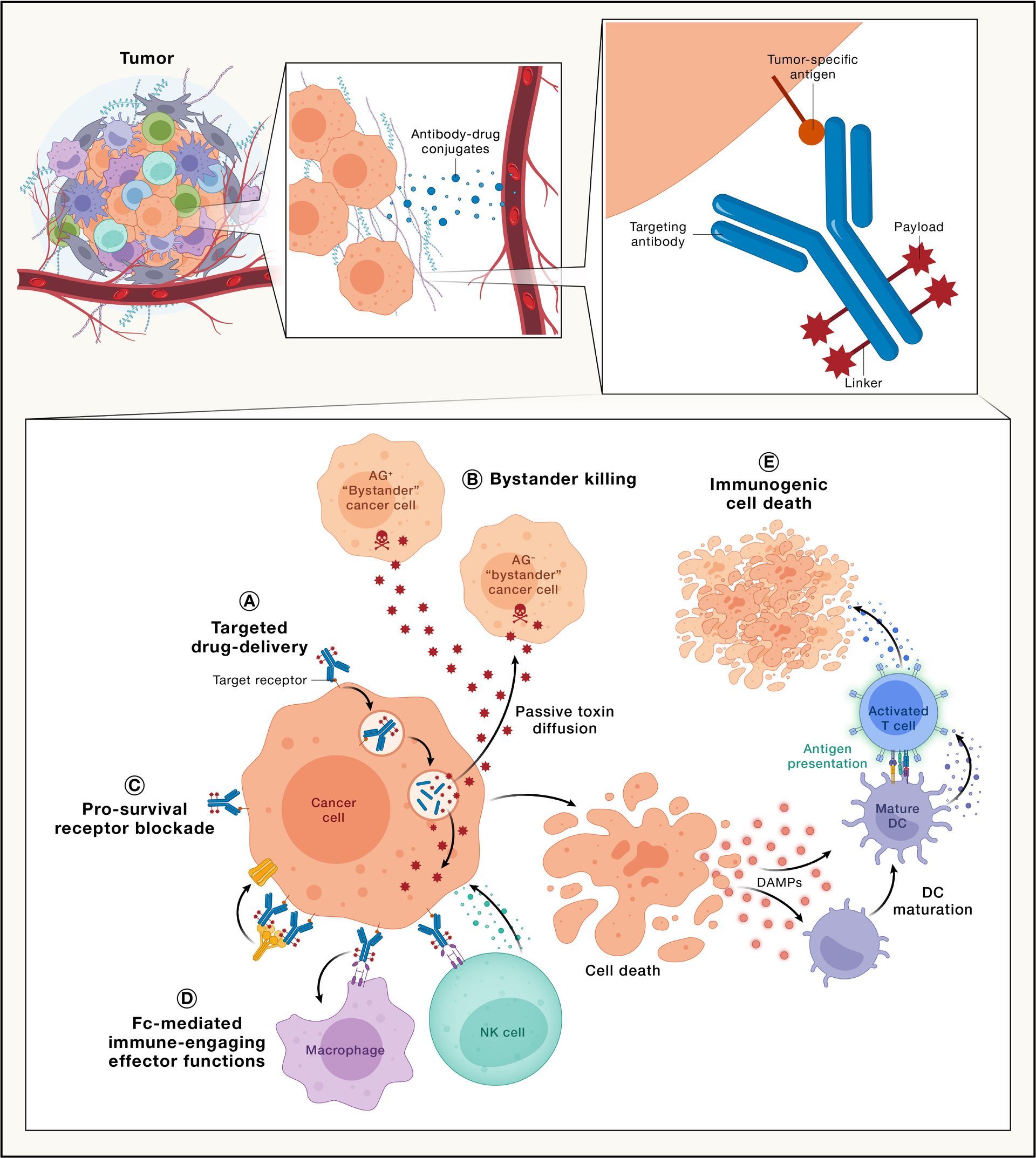
Figure 2 Mechanisms of action of ADCs
(A–E) ADCs diffuse within the tumor microenvironment and bind to tumor-specific antigens present on the tumor cell membrane. Cytotoxicity may result from (A) targeted drug delivery to the tumor cell after internalization of the antigen-ADC complex and release of the cytotoxic payload within the cytoplasm; (B) bystander killing by free payload released by dying cells; (C) blockade by the antibody of a receptor involved in pro-survival signaling; (D) Fc-mediated effector functions of the antibody; or (E) immunogenic cell death associated with an adaptive immune response.
Implications for antibody development:
As ADCs become increasingly sophisticated, understanding how individual design elements interact becomes critical. Fc biology, payload properties, linker stability, and tumor context all contribute to therapeutic behavior and may influence efficacy, safety, and translational success.
Our perspective:
This review reinforces a broader shift occurring across antibody engineering. Therapeutic performance is rarely dictated by a single attribute in isolation.
For ADCs, understanding how Fc engagement, payload behavior, and tumor biology work together can provide a more complete view of mechanism and help guide more informed development decisions.
At SeromYx, we support this type of multidimensional characterization through primary cell-based Fc effector function profiling and physiologically relevant assay systems designed to capture how engineered antibodies behave in complex biological contexts.
References:
Conilh L, Metrangolo V, Crescioli S, Reichert JM, Dumontet C. Navigating the clinical progress of antibody-drug conjugates: Emerging opportunities and remaining challenges. Cell. 2026;189(10):2791-2825. https://doi.org/10.1016/j.cell.2026.04.016