
Study Shows How New Antibody Therapy Works Against Ovarian Cancer
Research has shed light on how a new type of antibody treatment reactivates patients’ immune cells to fight ovarian cancer.
The research, from the group of Professor Sophia Karagiannis at King’s College London, could help to better understand the responses of patients who receive this type of therapy.
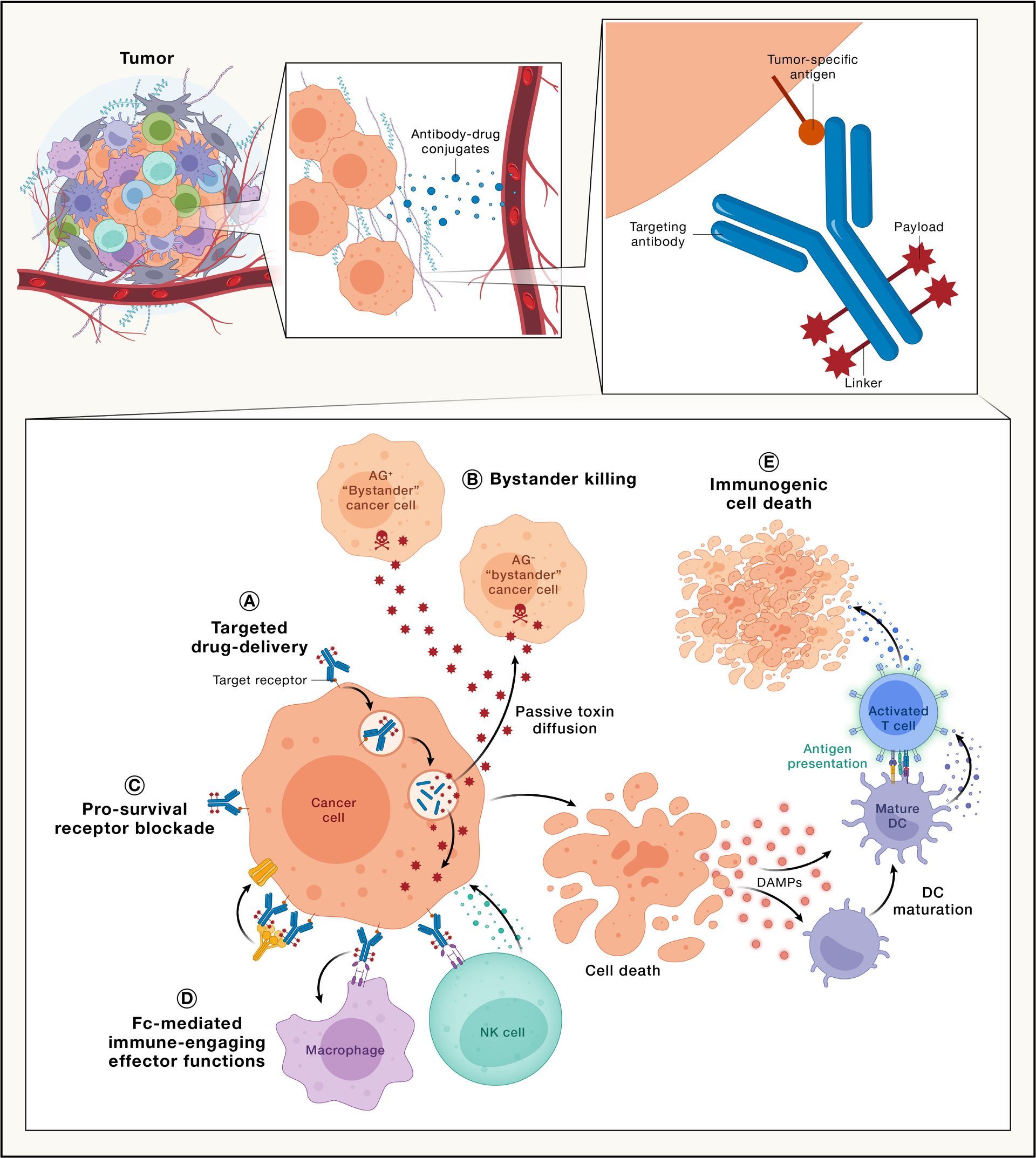
Antibody treatments are a type of immunotherapy, which work by helping the body’s immune system to recognise and kill cancer cells. Almost all antibodies currently used in cancer treatment are made from a type of antibody called IgG, however, IgGs have not been effective against ovarian cancer.
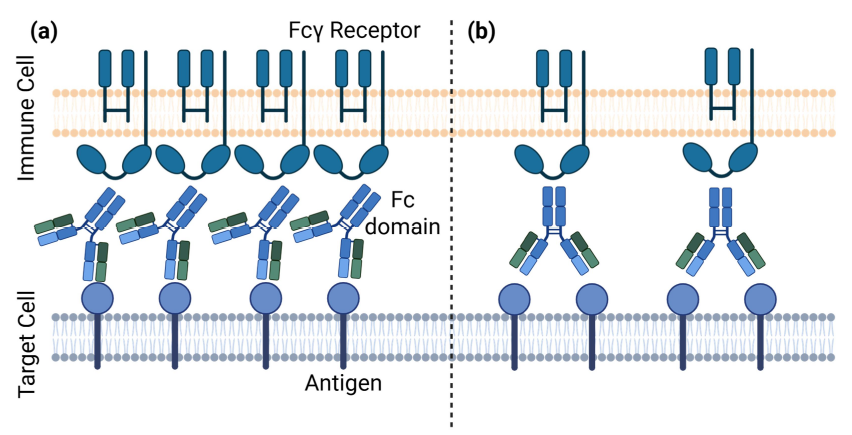
Researchers at King’s are the first in the world to develop a treatment from a different type of antibody, called IgE. IgE has important roles in triggering the immune response during an allergic reaction or by stimulating immune cells to fight parasite infections. Unlike IgG antibodies, which activate immune cells circulating in the blood, IgE antibodies bind very tightly to immune cells found in tissues. The team has been working to harness these immune-boosting activities of IgE against solid cancers.
The team investigated an IgE antibody called MOv18, exploring its ability to activate immune cells from patients at Guy’s and St Thomas’ NHS Foundation Trust with ovarian cancer and its influence on the tumour’s environment.
The research showed that MOv18 IgE works in a unique way, by reversing the suppression of the immune system imposed by the tumour, through activation of different groups of immune cells against the cancer.
MOv18 IgE treatment has already shown promising results in a phase Ia clinical trial designed and run by the King’s researchers in the National Institute for Health and Care Research (NIHR) Guy’s and St Thomas’ Clinical Research Facility and in collaboration with Cancer Research UK’s Centre for Drug Development. At low doses, MOv18 IgE shrank the tumour of a patient with ovarian cancer who had not responded to conventional therapy. In a new study, the team set out to understand exactly how the antibody works in the immune environment conditions of ovarian cancer.
The findings were published today in Nature Communications and the work was supported by Cancer Research UK, the Medical Research Council and Breast Cancer Now.
Understanding the biology
In the multidisciplinary study, conducted at King’s in collaboration with colleagues at Guy’s and St Thomas’ NHS Foundation Trust, the Medical University of Vienna, Fondazione IRCCS Instituto Nazionale dei Tumori, Milan, and SeromYx Systems, Inc, the team looked at how MOv18 IgE interacts with different groups of immune cells in ovarian cancer patients. They principally investigated macrophages, an immune cell which normally fights infection and kills microorganisms. However, cancer can corrupt macrophages – suppressing their ability to trigger an immune response and re-programming them to support tumour growth instead.
Previous research in animal models suggested that MOv18 IgE activates these corrupted macrophages to drive them towards fighting the cancer. To investigate this in the human context of ovarian cancer, the team first collected macrophages from healthy donors and then exposed them to cancerous fluid samples from the peritoneal cavity (the main site of ovarian cancer spread) of patients with ovarian cancer. The team then isolated macrophages directly from these patient-derived cancerous fluid samples. All patient samples were collected from Guy’s and St Thomas’ NHS Foundation Trust.
In both cases, they found that ovarian cancer suppressed the immune activity of macrophages. However, they discovered that MOv18 IgE could bind and activate these suppressed macrophages to kill ovarian cancer cells. Additionally, through this activation, MOv18 IgE reversed the suppressive effect of ovarian cancer macrophages on other immune cells called T cells, which are known to be key in maintaining long-term immune responses against cancer in patients.
Dr Gabriel Osborn, who conducted the research when he was a PhD student at King’s College London, said: “ We found that in patients, ovarian cancer re-programmed macrophages away from normal immune activation. Instead, they formed an immunosuppressive web in association with T cells, that could restrict anti-cancer immunity in patients. MOv18 IgE however induced patient macrophages to kill cancer cells and undergo a highly inflammatory activation, which reversed their suppressive effects on T cells. This study adds important patient-level information to support what we previously observed for MOv18 IgE in the laboratory and reveals, for the first time, that IgE-driven macrophage stimulation can activate the wider tumour immune system. ”
After seeing these results in the lab, the team looked at tumour biopsies from two patients who took part in the phase Ia clinical trial. They analysed one biopsy from each patient that had been collected before treatment with MOv18, and a second biopsy that was collected after treatment. They saw increased numbers of macrophages and T cells present in the post-treatment samples, indicating these two groups of immune cells play a key role in the anti-tumour activity of MOv18 IgE.
“ Understanding the biology of how a treatment works is essential for bringing treatments closer to patients, ” says Professor Sophia Karagiannis, Professor of Translational Cancer Immunology and Immunotherapy at King’s College London and senior author of the study. “ We found that immune cells which are otherwise inhibited in the ‘microenvironment’ of the tumour, are directed by IgE to target the cancer cells. While we are still progressing with clinical testing in patients, it is imperative that we continue in our quest towards understanding how MOv18 IgE, and a wider panel of IgE-based antibodies we are studying, harness the immune system in different groups of patients and cancer types.”
Dr Debra Josephs, consultant medical oncologist at Guy’s and St Thomas’ NHS Foundation Trust and co-author of the study who developed pre-clinical research studies that guided MOv18 IgE to clinical testing said: “ Our focus is to deepen our understanding of the immune system and its interaction with cancer, with the goal of discovering better treatments for patients. During the preclinical development of MOv18 IgE we demonstrated the important role of activation and migration of tumour-associated macrophages into cancer lesions for this antibody treatment to be effective. This research marks an important next step in the development of MOv18 IgE by advancing our understanding of macrophage-mediated mechanisms, thus supporting the therapeutic potential of this novel antibody.”
Professor James Spicer, Professor of Experimental Cancer Medicine at King’s College London, consultant in medical oncology at Guy’s and St Thomas’ NHS Foundation Trust and Chief Clinical Investigator of the MOv18 IgE Phase Ia trial, who is co-author of the study said: “ We need to achieve better outcomes for our patients. Clear progress is being made by studying the immune system and the environment in which the cancer grows. In our ongoing research we are striving to understand how we can capitalise on the power of IgE to develop novel effective treatments, which will complement established IgG antibody drugs used in the clinic. ”
The authors also acknowledge support from the Cancer Research UK City of London Centre and the King’s Health Partners Centre for Translational Medicine.
Read the full paper here.
Information on MOv18 IgE:
- MOv18 IgE antibody was discovered and developed at King’s College London, in collaboration with Dr Mariangela Figini at Fondazione IRCCS Instituto Nazionale dei Tumori, Milan, Italy, and clinically tested by the Experimental Cancer Medicine Centre based at Guy’s Hospital.
- MOv18 IgE has been licenced by Epsilogen Ltd., a King’s College London spinout company founded by Sophia Karagiannis and James Spicer. MOv18 IgE is undergoing a Phase Ib trial ( NCT06547840).
Notes to editors:
- The paper was published today in Nature Communications and can be accessed here: https://www.nature.com/articles/s41467-025-57870-y
King’s College London
King’s College London is amongst the top 40 universities in the world and top 10 in Europe (THE World University Rankings 2024), and one of England’s oldest and most prestigious universities. With an outstanding reputation for world-class teaching and cutting-edge research, King’s maintained its sixth position for ‘research power’ in the UK (2021 Research Excellence Framework). King’s has more than 33,000 students (including more than 12,800 postgraduates) from some 150 countries worldwide, and 8,500 staff. For nearly 200 years, King’s students and staff have used their knowledge and insight to make a positive impact on people, society and the planet.
SeromYx Systems, Inc.
SeromYx Systems, Inc. is a global leader in providing GCLP high-throughput antibody characterization services and Systems Serology, offering advanced solutions for the comprehensive analysis of immune responses. With a dedication to innovation and excellence, SeromYx is at the forefront of revolutionizing the field of immunology through its cutting-edge technologies and strategic collaborations.
National Institute for Health and Care Research
The mission of the National Institute for Health and Care Research (NIHR) is to improve the health and wealth of the nation through research. We do this by:
- Funding high quality, timely research that benefits the NHS, public health and social care;
- Investing in world-class expertise, facilities and a skilled delivery workforce to translate discoveries into improved treatments and services;
- Partnering with patients, service users, carers and communities, improving the relevance, quality and impact of our research;
- Attracting, training and supporting the best researchers to tackle complex health and social care challenges;
- Collaborating with other public funders, charities and industry to help shape a cohesive and globally competitive research system;
- Funding applied global health research and training to meet the needs of the poorest people in low and middle income countries.
NIHR is funded by the Department of Health and Social Care. Its work in low and middle income countries is principally funded through UK international development funding from the UK government.