
PEGS 2026 Poster

May 18, 2026

Impact of Fc Engineering on CAR-T Directing mAbs: Derisking Antigen-Specific FcR Binding and Consequent Effector Function
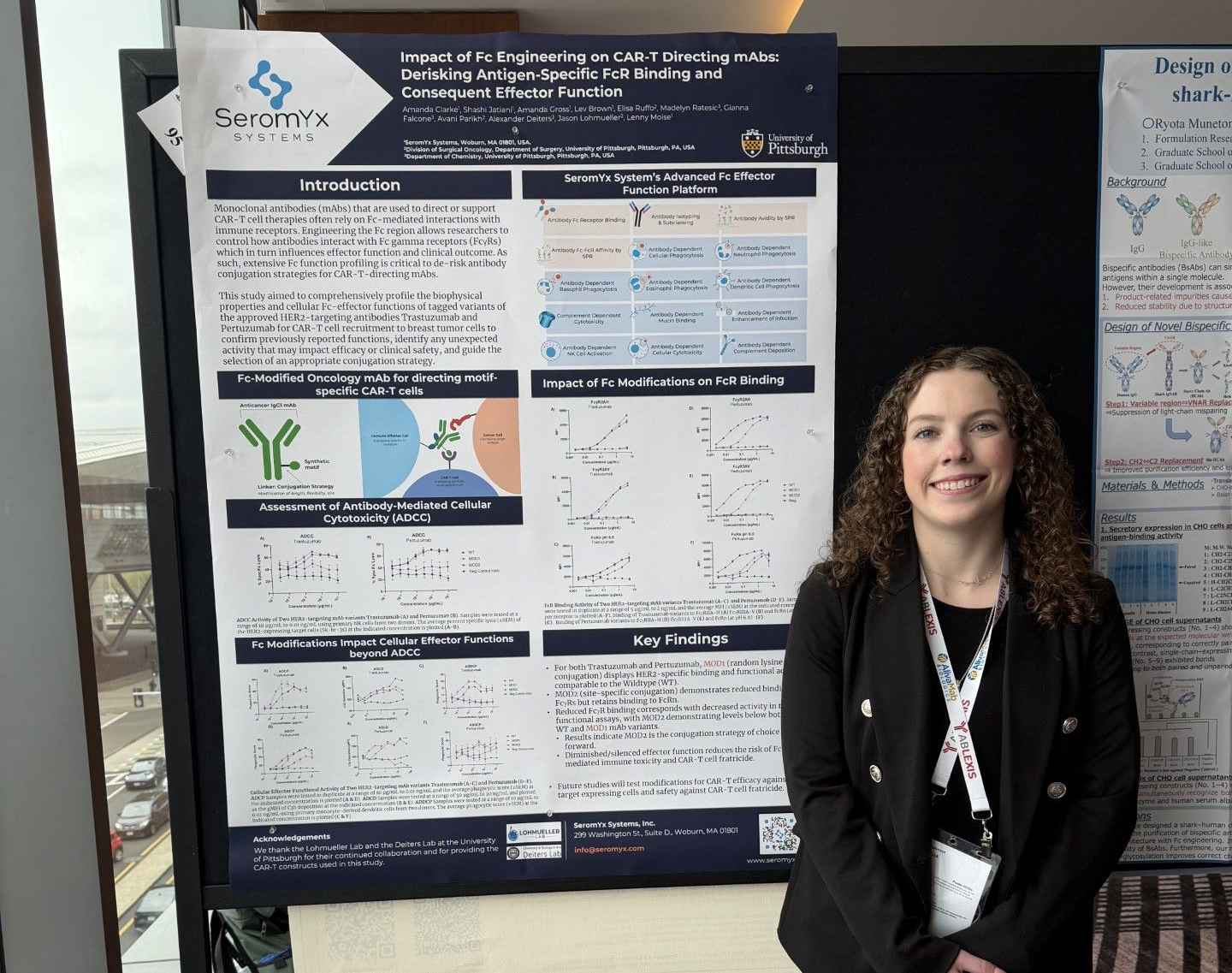
Monoclonal antibodies (mAbs) used to direct or support CAR-T cell therapies often rely on Fc-mediated interactions with immune receptors. Engineering the Fc region of these mAbs can impact how they interact with Fc gamma receptors, in turn influencing effector functions and clinical outcomes.


As such, extensive Fc function profiling is critical to de-risk antibody conjugation strategies for CAR-T-directing mAbs. This study aimed to evaluate the biophysical properties and cellular Fc-effector functions of site-specific specific engineered variants of the approved HER2-targeting antibodies Trastuzumab and Pertuzumab to confirm previously reported functions, identify any unexpected activity that may impact efficacy or clinical safety, and guide the selection of an appropriate conjugation strategy.
Download Poster
May 18, 2026
Type: Conference Dates: October 19th-21st, 2026 Location: Amsterdam, Netherlands
May 18, 2026
Type: Conference Dates: November 16th-18th, 2026 Location: Peabody, MA
May 18, 2026
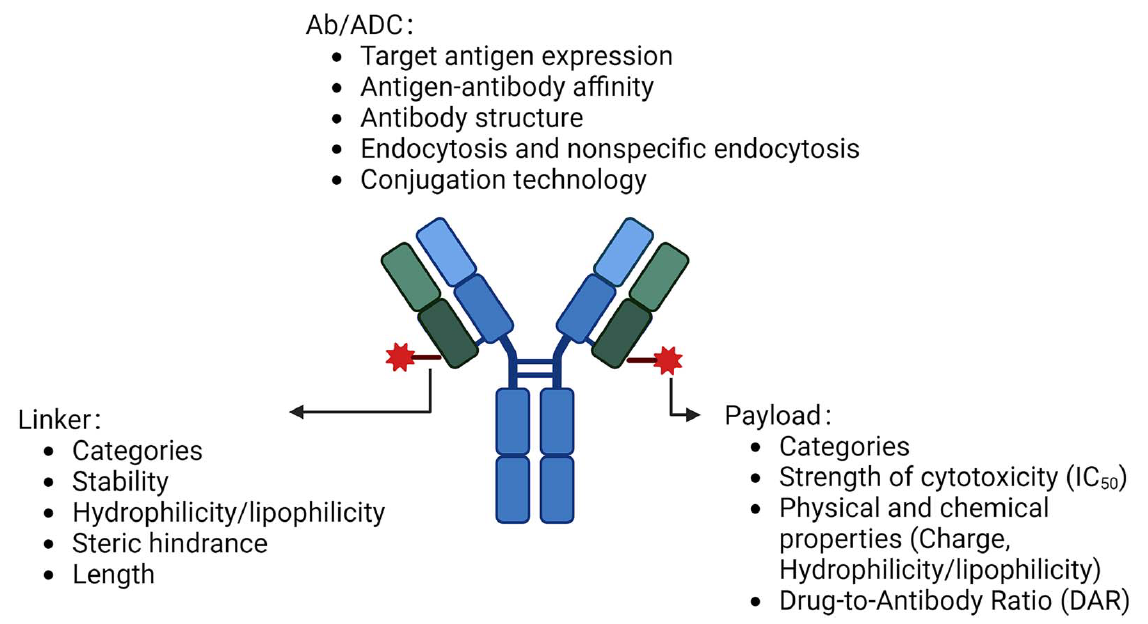
The Fc Review: How much does Fc design influence the next generation of ADCs? A recent Cell review explores the rapid evolution of antibody-drug conjugates (ADCs), highlighting how advances in payloads, linker technologies, and antibody engineering are reshaping the field across both hematologic and solid tumors. Background: ADCs were originally developed as targeted delivery vehicles for highly potent payloads. But as the field matures, it is becoming increasingly clear that ADC activity is shaped by far more than antigen targeting alone. Factors such as linker stability, payload permeability, tumor microenvironment, bystander killing, and Fc-mediated interactions can all influence therapeutic performance. The study highlights: Fc-mediated mechanisms such as ADCC, ADCP, and complement activation can contribute to ADC activity beyond payload delivery. Some next-generation ADCs are intentionally engineered to enhance Fc effector function, while others incorporate Fc-silencing strategies to minimize off-tumor interactions. Payload selection, linker chemistry, and drug-to-antibody ratio all influence efficacy, safety, and bystander activity. Tumor antigen expression alone is often insufficient to predict ADC behavior, highlighting the importance of functional characterization and biological context.
April 21, 2026
The Fc Review: Are we oversimplifying Fc glycosylation? A recent study in mAbs explores how glycan pairing within IgG antibodies shapes Fcγ receptor engagement and ADCC, highlighting an often-overlooked layer of Fc biology. Background: Fc glycosylation is a well-known modulator of antibody function, influencing Fcγ receptor binding and downstream effector activity. However, each IgG contains two Fc glycans, one on each heavy chain, that can pair symmetrically or asymmetrically. Most analytical approaches report glycan composition as an average, without capturing how these glycans are distributed across individual molecules. This study asks a key question. Does glycan pairing itself influence Fc function? The study highlights: Fc glycan pairing, not just overall composition, influences Fcγ receptor binding across multiple receptors and allotypes A single afucosylated glycan was sufficient to drive enhanced FcγRIIIa binding and ADCC, with limited additional benefit from full afucosylation Galactosylation and high-mannose structures showed receptor- and context-dependent effects on Fc engagement Functional outcomes cannot be fully inferred from bulk glycan profiles, as different pairing configurations can produce distinct biological behavior
March 10, 2026
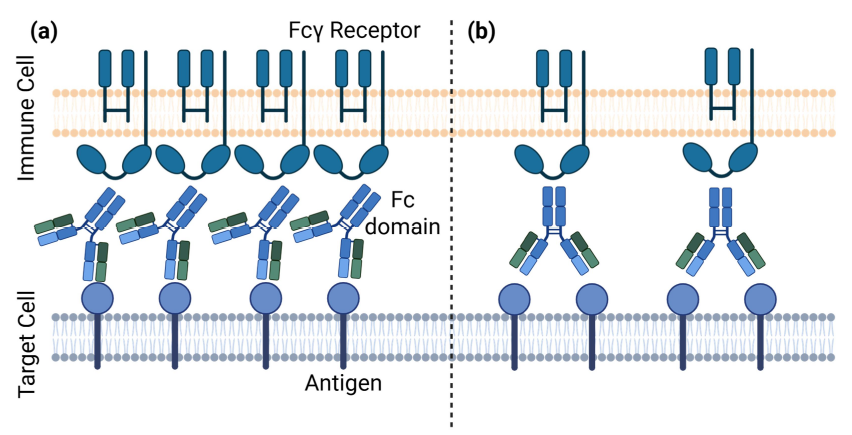
The Fc Review: How do antibody structure and binding dynamics shape ADCC signaling? A recent study in The AAPS Journal explores how multiple antibody design features, including Fab affinity, hinge flexibility, Fc engagement, and antigen density, influence antibody-dependent cellular cytotoxicity (ADCC) signaling. Background: ADCC is a key mechanism of action for many therapeutic antibodies, yet the strength of this response depends on more than Fcγ receptor binding alone. Productive immune activation requires antibodies to bridge target cells and effector cells within the immune synapse, forming receptor crosslinks that trigger downstream signaling. Using a combination of computational modeling and experimental data, this study examines how structural properties of antibodies influence these crosslinking events and ultimately shape ADCC signaling outcomes. The study highlights: ADCC signaling is influenced by multiple antibody properties, including Fab affinity, hinge flexibility, Fc receptor engagement, and antigen expression levels. Antibody structure affects how efficiently Fc receptors and target antigens are crosslinked within the immune synapse. In some cases, moderate Fab affinity supported stronger signaling by favoring productive crosslinking configurations. Antibody valency and hinge flexibility also influenced signaling outcomes by altering the geometry of immune synapse interactions.
February 12, 2026
The Fc Review: How well do our preclinical models capture human Fc biology? A new Science Immunology study takes a deep look at Fcγ receptor and FcRn expression across humans, non-human primates, and mice, highlighting how species-specific differences shape Fc-mediated immune function. Background: Fc-dependent activity is influenced not only by antibody design, but also by where and how Fcγ receptors are expressed across immune cell types and tissues. While animal models remain central to #antibody development, differences in Fcγ receptor biology across species can complicate interpretation of Fc-driven mechanisms. The study highlights: Species-specific differences in Fcγ receptor expression patterns across immune cell subsets and tissues. Context-dependent regulation of Fcγ receptors by inflammatory cues, with expression shifting across cell types and environments. These differences influence how Fc-mediated functions are engaged and interpreted across experimental systems. Cross-species variation in FcγR and FcRn biology helps explain why Fc-dependent effects observed preclinically may not always translate cleanly to human settings. 
January 21, 2026
The Fc Review: How are antibody developers actually using Fc engineering today? A recent analysis of the IMGT/mAb-DB database takes a systematic look at engineered Fc variants across therapeutic antibodies and fusion proteins, offering a real-world snapshot of how Fc design choices are being deployed in the clinic. Background: Fc engineering is often discussed in terms of individual mutations or isolated use cases. But at an industry level, it’s less clear how frequently Fc variants are used, which functions are prioritized, and whether antibodies rely on single or multiple Fc modifications. By mining curated entries in IMGT/mAb-DB, this study steps back to examine Fc engineering trends across approved and clinical-stage molecules. The review highlights: Fc engineering is widespread across therapeutic antibodies and fusion proteins cataloged in IMGT/mAb-DB Effector silencing strategies are commonly employed, particularly in programs prioritizing safety and controlled immune engagement Many molecules incorporate multiple Fc variants, rather than a single engineered change Fc modifications are used across a range of mechanisms and formats, underscoring Fc’s role as an intentional design lever
December 4, 2025
The Fc Review: Continuing our series taking a closer look at recent Fc-focused papers, what they found, and why it matters for antibody discovery and development. Can we program the Fc region? A recent bioRxiv preprint explores this question at scale, using millions of Fc variants to train machine learning models that predict functional outcomes across FcγR interactions. Background: Through engagement with Fc-receptors, the antibody Fc domain can direct a broad range of immune activities, including phagocytosis, cytokine release, antigen presentation, and immune cell polarization – each of which could be precisely tuned to combat disease. Fc engineering has traditionally focused on modifying one property at a time (E.g., ADCC, ADCP, or half-life). This work instead treats the Fc region as a functional design space and explores how sequence variations across the Fc domain can be linked to real immune engagement. 
November 20, 2025
The Fc Review: One Fc variant, three advantages? A Nature Communications study demonstrates how a single Fc-engineered IgG achieved improved half-life, mucosal distribution, and enhanced immune-mediated killing, across both cancer and bacterial models. Background: Fc engineering is often discussed through a single lens, half-life extension, effector boosting, or silencing. This paper explores a broader question: can an Fc variant containing three point mutations deliver multiple functional gains across different biological systems?
October 28, 2025
The Fc Review: How does Fc engineering shape bispecific antibody function? A Frontiers in Bioengineering and Biotechnology review explores how the Fc region can be tuned to control effector function, half-life, and safety, key levers in the design of next-generation bispecific antibodies ( bsAbs ). Background: Bispecific antibodies bring new therapeutic possibilities by engaging multiple targets at once. But this complexity also brings new challenges, from unwanted immune activation to altered pharmacokinetics . The Fc region plays a central role here, acting as both a stabilizing scaffold and a regulator of immune effector engagement
More Posts →